
Pain, stiffness or an injury can suddenly make movement, work, sleep or sport much more difficult. At Salbar Fysiotherapie in Vinkeveen, you receive personal support from physiotherapist Boris Feldman. You receive clear explanations and a treatment plan tailored to your symptoms and goals. Together, we identify what influences your symptoms, which activities are limited and what you need to move more easily again. Treatment is not based on a single fixed method. Your symptoms, your capacity and your personal goals determine the approach.
You usually do not need a GP referral for physiotherapy.
What can I help you with?
I treat adults with a wide range of musculoskeletal problems. These may involve a recent injury or symptoms that have been present for months or years.
Back problems
Low back pain is very common and may have many different causes and contributing factors. Sometimes pain starts suddenly after lifting or an awkward movement. In other cases, symptoms develop gradually. For example, you may experience:
- low back pain;
- stiffness;
- pain when sitting or standing;
- difficulty bending or lifting;
- pain when turning;
- pain radiating into the buttock or leg;
- symptoms during work or driving;
- recurring episodes of back pain.
During the assessment, I look beyond the painful area to consider movement, strength, your capacity for activity, neurological signs and the activities that bring on your symptoms. Radiating symptoms receive particular attention for possible nerve involvement. The aim is not to ‘straighten’ your back, but to determine how you can move and bear loads safely and confidently again.
Neck problems
Neck pain may be associated with prolonged sitting, work demands, stress, a sudden movement, an accident or changes in your capacity for activity. Symptoms may remain in the neck or radiate into:
- the shoulders;
- the shoulder blades;
- the arms;
- the hands;
- or the head.
During the assessment, I examine neck movement, strength, neurological function and movements that trigger or reduce your symptoms. When headaches are likely to be influenced by the neck, physiotherapy may form part of treatment. For neurological symptoms or other signs that may require further medical assessment, I recommend contacting your GP.
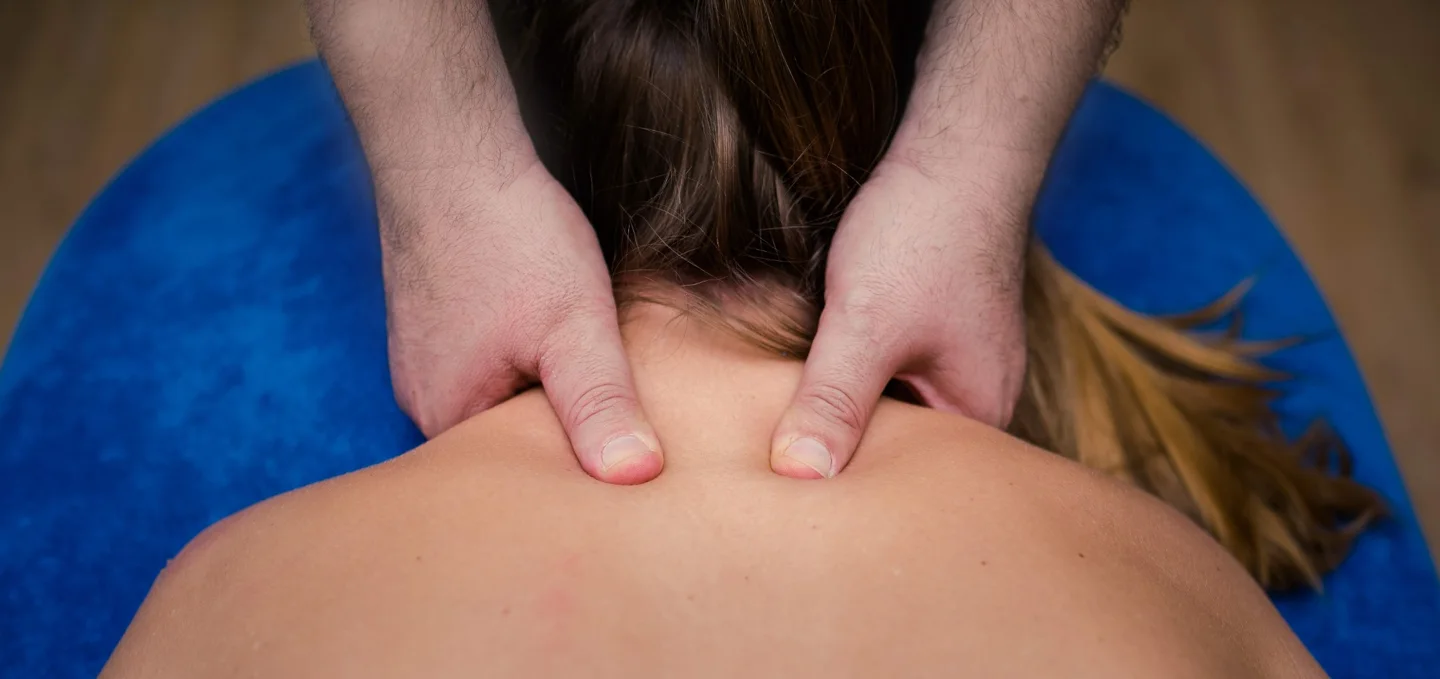
Shoulder problems
A painful shoulder can significantly limit everyday activities. Putting on your coat, sleeping on the affected side, reaching into a cupboard or moving your arm overhead may become difficult. I treat patients with conditions including:
- shoulder pain when raising the arm;
- rotator cuff-related problems;
- tendon-related shoulder problems;
- restricted movement;
- frozen shoulder;
- symptoms following an injury;
- symptoms following surgery;
- reduced strength or capacity for activity.
Not every abnormality visible on ultrasound or MRI is necessarily the cause of pain. Where possible, I therefore combine medical information with the physical examination and how you actually function. Treatment may include exercise therapy, gradual loading, mobilisation and additional techniques when clinically relevant.
Elbow, wrist and hand
Problems involving the elbow, forearm, wrist or hand can also significantly affect work and everyday activities. Examples include:
- tennis elbow;
- golfer’s elbow;
- overuse problems;
- pain when gripping;
- symptoms following trauma;
- reduced strength;
- stiffness after immobilisation;
- nerve-related symptoms.
If you have tingling, numbness or loss of strength, I assess whether nerve structures may be involved. If the findings suggest that further medical assessment is needed, I discuss this with you.
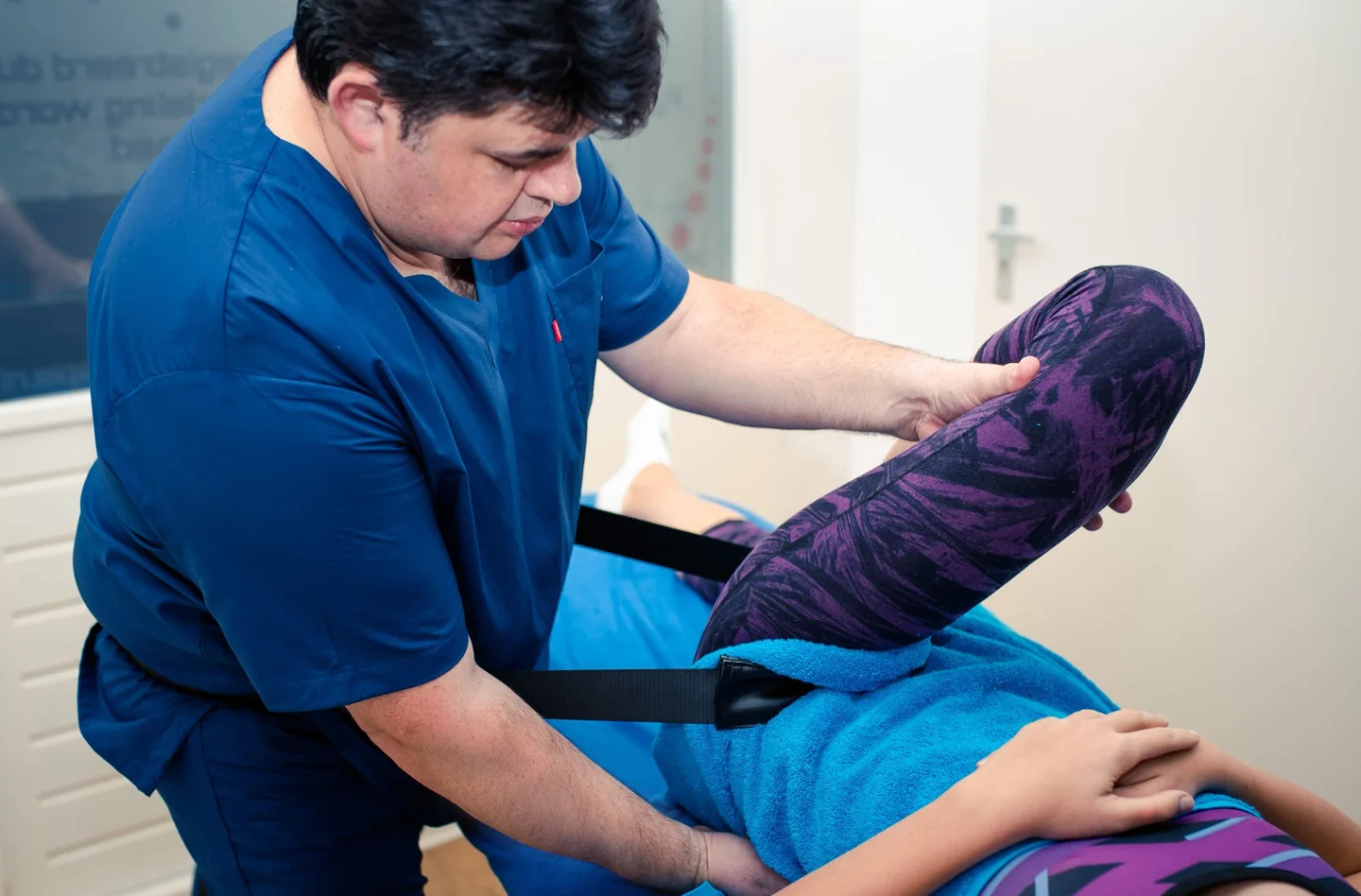
Hip and groin problems
Hip and groin problems can occur when walking, climbing stairs, playing sport, sitting for a long time or lying on the affected side. Possible symptoms include:
- groin pain;
- pain on the outside of the hip;
- stiffness;
- reduced hip mobility;
- muscle- or tendon-related problems;
- problems associated with hip osteoarthritis;
- recovery after hip surgery.
Treatment depends on the cause and your capacity for activity. Targeted exercise therapy is an important part of treatment for many hip problems.
Knee problems
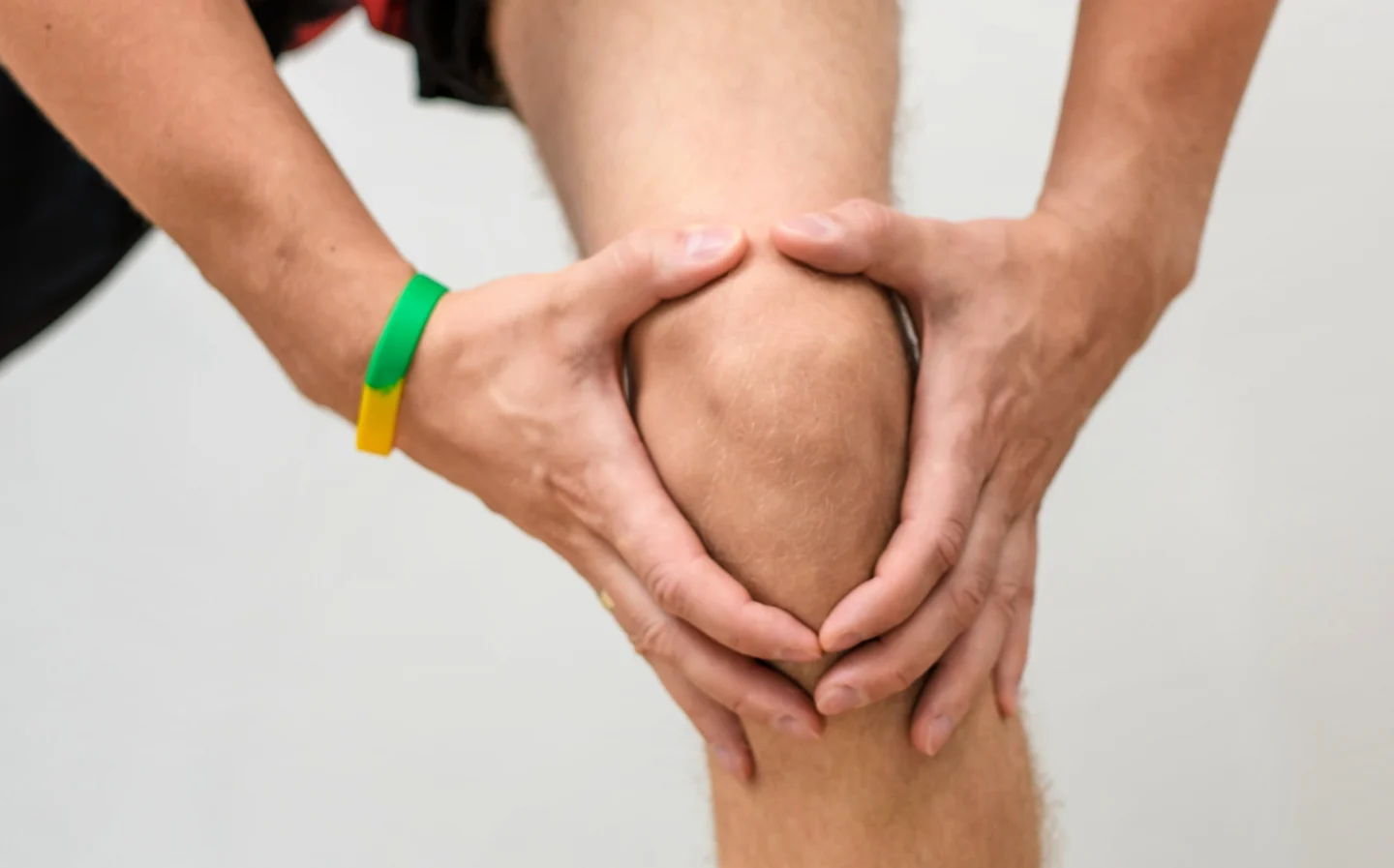
The knee needs to be sufficiently strong, mobile and stable for everyday activities and sport. I treat conditions including:
- knee problems following a sports injury;
- overuse problems;
- patellofemoral problems;
- tendon-related problems;
- knee osteoarthritis;
- symptoms following meniscus problems;
- recovery after knee surgery;
- rehabilitation following ligament injury.
The assessment considers mobility, muscle strength, stability, coordination and the loads the knee needs to tolerate. For athletes, the eventual focus is not only pain-free movement, but also the demands required for a safe return to sport.
Ankle, Achilles tendon and foot
Foot and ankle problems can affect your entire movement pattern. You can seek help for issues such as:
- an ankle sprain;
- instability;
- Achilles tendon problems;
- heel pain;
- overuse problems;
- pain when walking or playing sport;
- recovery after a fracture or surgery;
- limitations in mobility or strength.
Where needed, treatment focuses on restoring movement, strength, balance and capacity for activity.
Radiating pain, tingling and nerve-related symptoms
Tingling or numbness does not automatically mean that a nerve is severely damaged. However, neurological symptoms do require careful assessment. I consider factors including:
- the area where symptoms are felt;
- strength;
- sensation;
- nerve-related provocation tests;
- neck or back movements;
- changes during movement.
If I find signs that do not fit typical musculoskeletal problems, I refer you back to your GP.
Rehabilitation after surgery
After surgery, tissue healing alone is not enough. You also need to regain sufficient movement and capacity for activity. For example, I support patients after surgery involving:
- shoulder;
- the hip;
- the knee;
- the ankle;
- or other parts of the musculoskeletal system.
Rehabilitation is tailored to the type of surgery, the specialist’s instructions and your personal goals. We work step by step on: mobility -> control -> strength -> capacity for activity -> everyday activities -> work or sport.
Persistent pain and recurring symptoms
When pain persists, the problem is often more complex than an individual muscle or joint. Pain can be influenced by several factors, such as:
- physical demands;
- reduced capacity for activity;
- sleep;
- stress;
- fear of movement;
- prolonged inactivity;
- past experiences;
- general health.
This does not mean the pain is ‘all in your head’. It means that pain is a biological process that can be influenced by several systems. For persistent symptoms, we therefore consider not only where it hurts, but also what is hindering recovery and what you need to rebuild and learn to trust again.
Sports injuries
With a sports injury, becoming pain-free is usually not enough. Your body needs to meet the demands of your sport again. Depending on the injury, rehabilitation may focus on:
- mobility;
- strength;
- explosive power;
- stability;
- coordination;
- speed;
- jumping and landing control;
- sport-specific loading.
Progression is gradual. The ultimate goal is not simply to return to sport, but to do so as responsibly as possible.
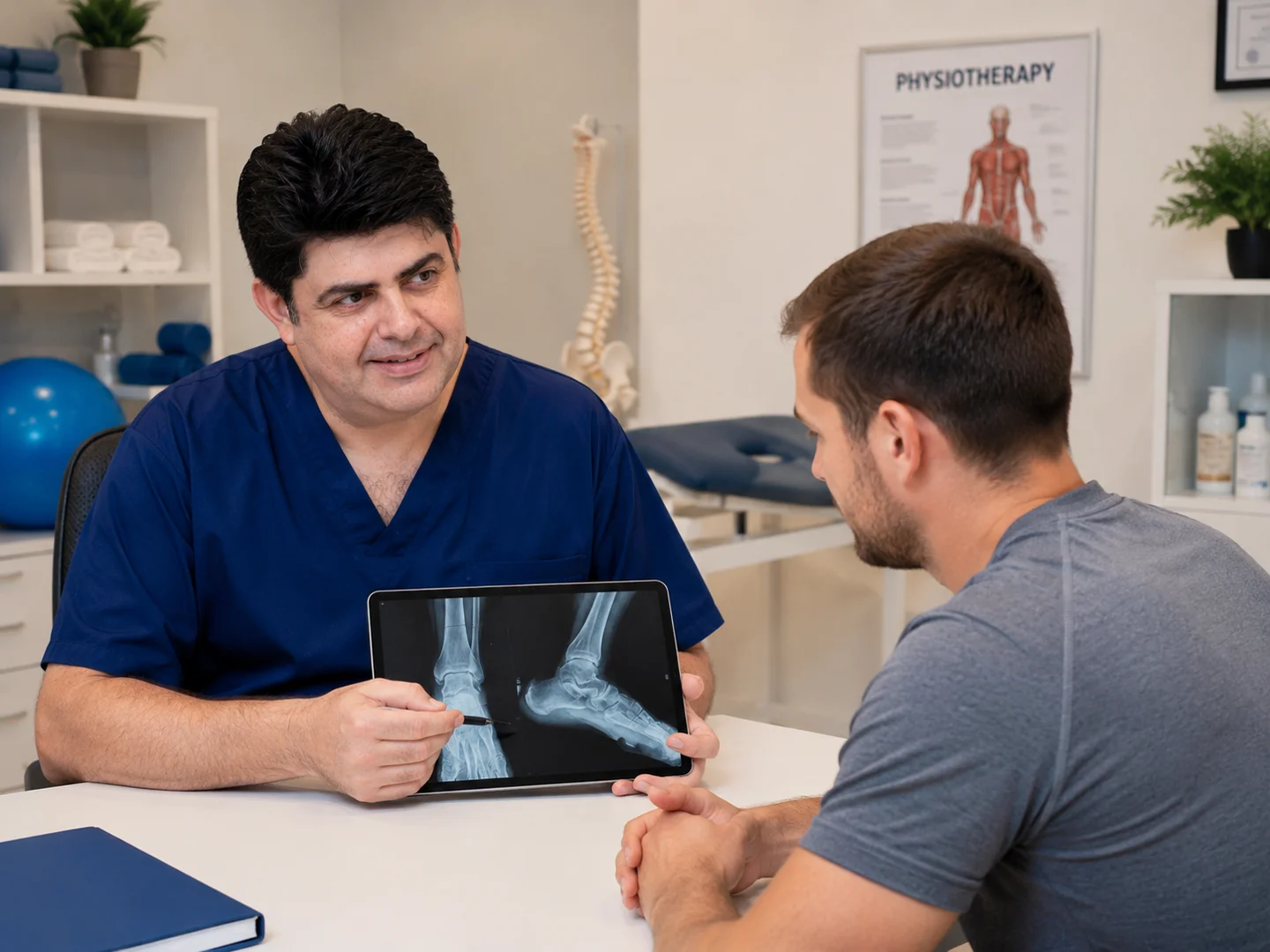
What happens at the first appointment?
1. History taking
We begin with an in-depth conversation. I want to know:
- what symptoms you have;
- when the symptoms began;
- what makes them worse or better;
- which medical history is relevant;
- which activities you can no longer perform comfortably;
- and what you want to achieve through treatment.
2. Physical examination
This is followed by a targeted examination. Depending on your symptoms, it may assess:
- movement;
- strength;
- joint function;
- coordination;
- capacity to tolerate activity;
- neurological function;
- specific provocation tests;
- or functional movements.
3. Explanation
After the examination, I discuss my findings. I explain what is likely to be relevant, which factors may influence your symptoms and what I expect from physiotherapy.
4. Treatment plan
We then decide on the treatment plan together. The plan is shaped not only by a diagnosis, but also by your recovery goals.
Which treatment methods do I use?
For me, physiotherapy is not about applying one favourite technique. Depending on the assessment, treatment may include several components.
Exercise therapy
For many conditions, exercise therapy forms the foundation of lasting recovery. We can work on:
- strength;
- mobility;
- coordination;
- endurance;
- stability;
- movement control;
- or specific activities you want to perform again.
Manual treatment techniques
Mobilisation and other hands-on techniques may be used when they help reduce symptoms or temporarily make movement easier. They are not based on the idea that joints are literally ‘out of place’ or constantly need putting back. Their effects are evaluated during and after treatment.
IASTM and soft-tissue techniques
Instrument Assisted Soft Tissue Mobilisation and other manual techniques may be used as an additional intervention for selected patients. The aim is not to mechanically ‘break down’ scar tissue or fascia. Treatment can temporarily influence pain, comfort during movement or range of motion, after which active movement and loading are gradually built up.
Taping
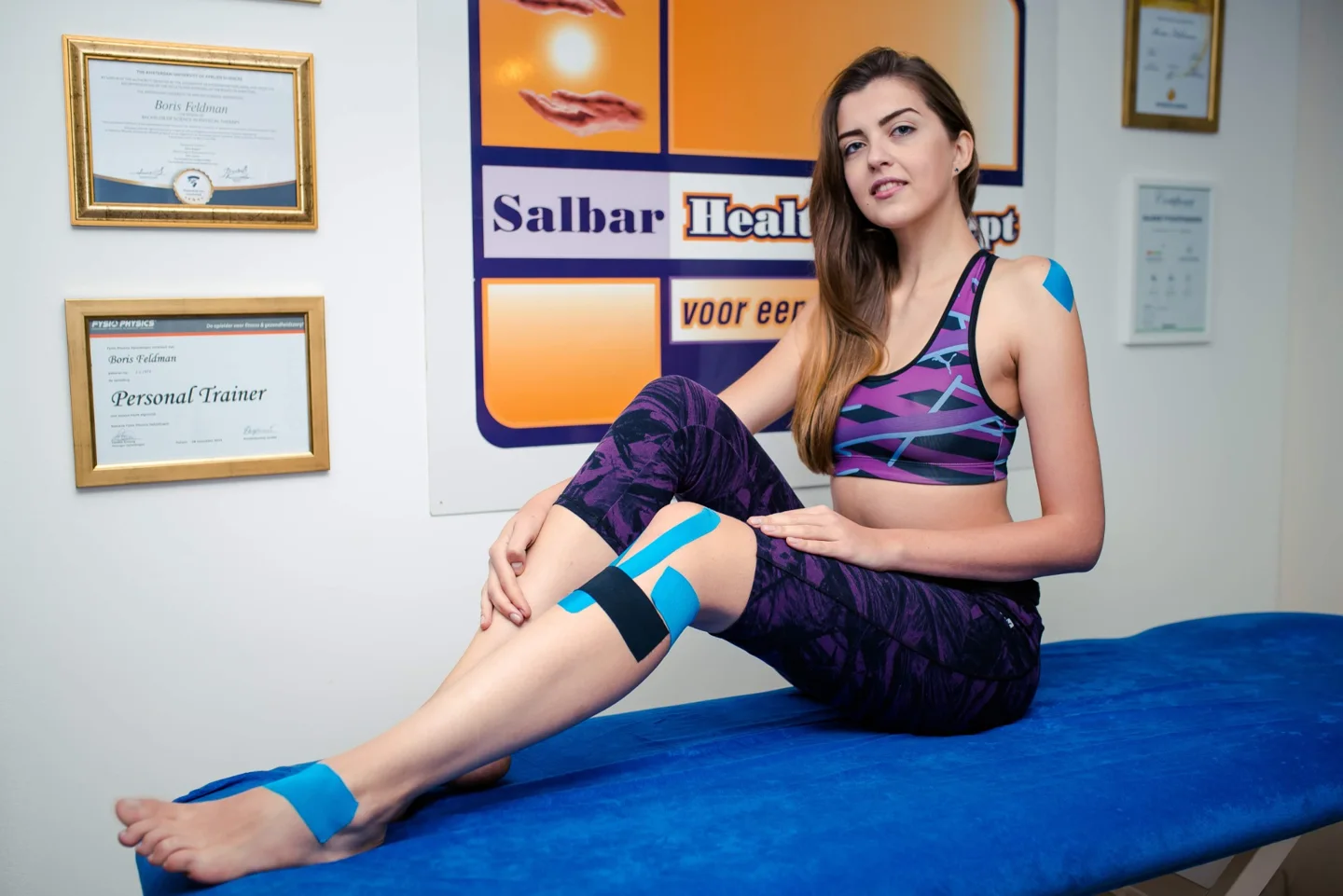
Kinesiology taping, dynamic taping or other taping techniques may be used temporarily for:
- support;
- sensory feedback;
- assistance during movement;
- or additional symptom modulation.
Tape is an aid, not a substitute for active rehabilitation.
Shockwave
For certain tendon-related conditions, shockwave therapy may form part of the treatment plan. Suitability is determined individually and, where needed, shockwave is combined with a gradually progressing exercise programme.
Electrical stimulation
Neuromuscular electrical stimulation may be used in specific situations to support muscle activation or rehabilitation. It remains an addition to active training.
Tecar
Tecar may be used as an additional physical treatment modality when it can play a useful role in treatment. Here too, a device never determines the treatment plan.
My approach
During each treatment, I try to answer three questions: 1. Are your symptoms changing? 2. Is your function improving? 3. Are you getting closer to your personal goal? If treatment has insufficient effect, we do not automatically keep repeating the same approach. We evaluate, adapt the strategy or discuss whether further assessment is needed.
No unnecessarily prolonged treatment programmes
The aim of physiotherapy is not to become dependent on treatment. As your recovery progresses, the emphasis shifts from treatment to independent movement and training. Ultimately, you should know:
- what you can do yourself;
- which level of activity is appropriate;
- how to progress further;
- and what to do if symptoms flare up again.
My aim is for you to need me as little as possible in the end.
When physiotherapy is not the right first step
Not every musculoskeletal complaint is automatically a physiotherapy problem. If your history or examination suggests that you should consult a doctor first, I will explain this clearly. Examples include certain combinations of:
- unexplained severe pain;
- fever or illness;
- recent serious trauma;
- progressive loss of strength;
- certain neurological symptoms;
- unexplained weight loss;
- or other findings that do not fit a normal musculoskeletal recovery pattern.
Safe treatment also means recognising when not treating is the right decision.
Personal physiotherapy at Salbar
Boris Feldman has worked as a physiotherapist since 1996. His years of clinical experience are complemented by ongoing professional development and further study of assessment and treatment methods. At Salbar Fysiotherapie, experience and up-to-date knowledge inform a thorough assessment, clear explanations and a treatment plan tailored to your symptoms and goals.
Physiotherapist Boris Feldman
I have worked as a physiotherapist since 1996. Over the years, I have continued to develop my skills in musculoskeletal physiotherapy, rehabilitation, exercise therapy and various additional treatment techniques. To me, experience does not mean always knowing the answer immediately. It means assessing systematically, evaluating critically and changing my approach when the situation calls for it. The right treatment does not start with a technique. It starts with understanding what the patient needs.
Physiotherapy in Vinkeveen
Salbar Fysiotherapie is based in Vinkeveen and welcomes patients from Vinkeveen · Mijdrecht · Wilnis · De Ronde Venen and the surrounding area, among other places. Would you like to know what may help with your symptoms? Book an initial assessment. Salbar Fysiotherapie, Boris Feldman – physiotherapist, Scholeksterlaan 2, 3645 KC Vinkeveen