After an injury, surgery or a prolonged period of pain, simply “having fewer symptoms” is often not enough. You want to walk, lift, work, exercise, climb stairs or use your arm normally again. At Salbar Fysiotherapie in Vinkeveen, physiotherapist Boris Feldman personally guides you throughout your rehabilitation. We work not only on reducing pain, but above all on restoring:
- mobility;
- strength;
- coordination;
- capacity to tolerate activity;
- confidence in movement;
- and the activities that matter to you.
What is rehabilitation?
Rehabilitation means gradually preparing your body again for the demands of everyday life. These demands can vary considerably. For one patient, recovery means climbing stairs without pain. For another, it means managing a full working day again. For an athlete, it means running, jumping, turning and accelerating again. There is therefore no single standard rehabilitation programme that suits everyone. Your goals help determine how we train.
When is rehabilitation helpful?
You can come to me for rehabilitation after, among other things:
- a sports injury;
- surgery;
- a period of immobilisation;
- a muscle or tendon injury;
- a joint injury;
- persistent back or neck symptoms;
- shoulder problems;
- knee or hip symptoms;
- ankle and foot problems;
- loss of strength or fitness;
- recurring symptoms during physical activity.
Even if you have medically “recovered” but still find that movement does not come naturally, physiotherapy rehabilitation may be helpful.
Rehabilitation after surgery
After surgery, the body needs time to recover. However, rest alone does not automatically restore strength, mobility and physical capacity. We therefore work in stages after surgery. Depending on the procedure and your specialist’s instructions, we focus on:
Phase 1 – Protection and movement
In the first phase, safe recovery is the priority. We pay attention to:
- pain and swelling;
- wound healing;
- permitted loading;
- mobility;
- and preventing unnecessary loss of function.
Phase 2 – Mobility and control
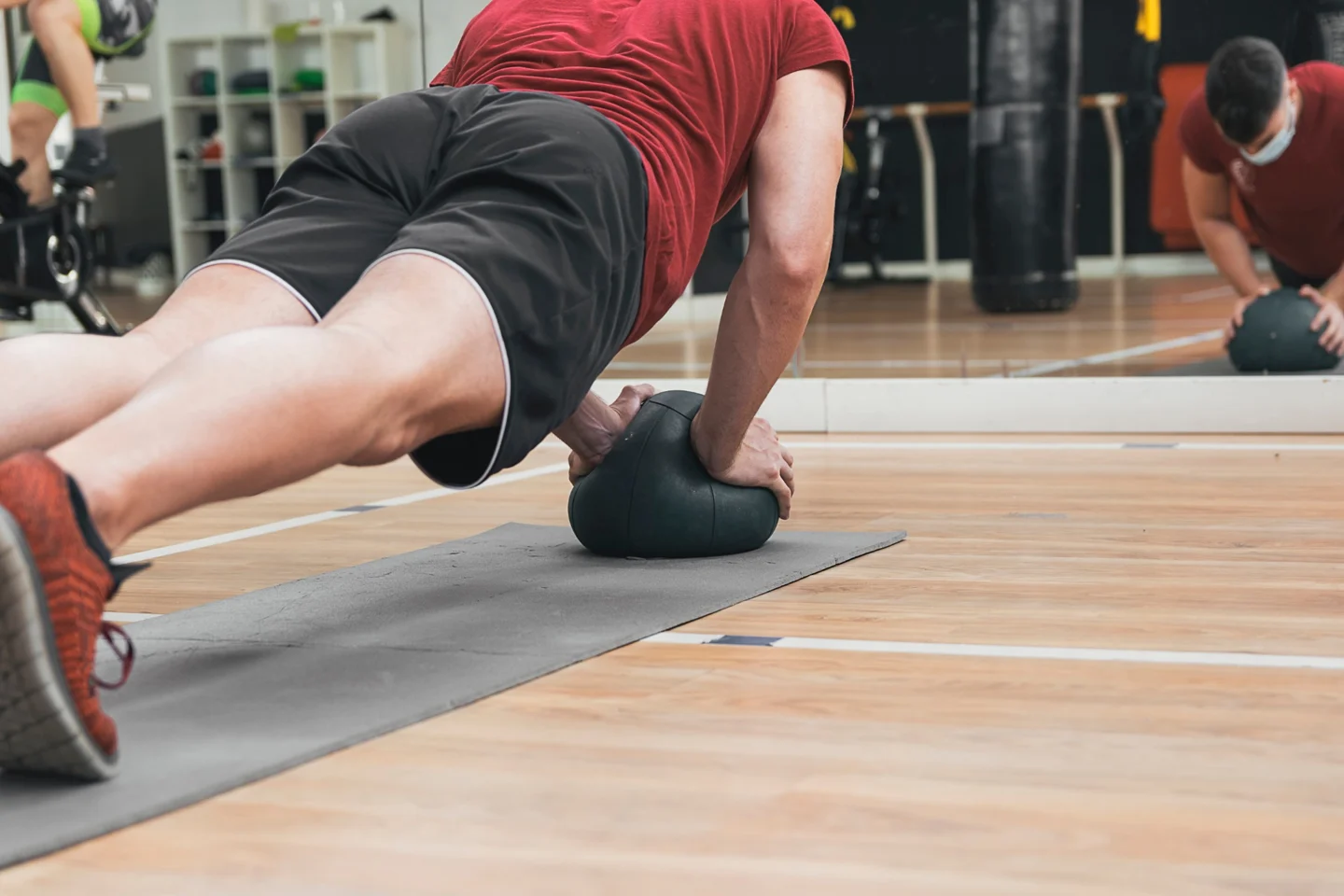
When tissue healing allows, we gradually increase movement. For example, we work on:
- joint mobility;
- muscle activation;
- movement control;
- walking;
- everyday activities.
Phase 3 – Strength and physical capacity
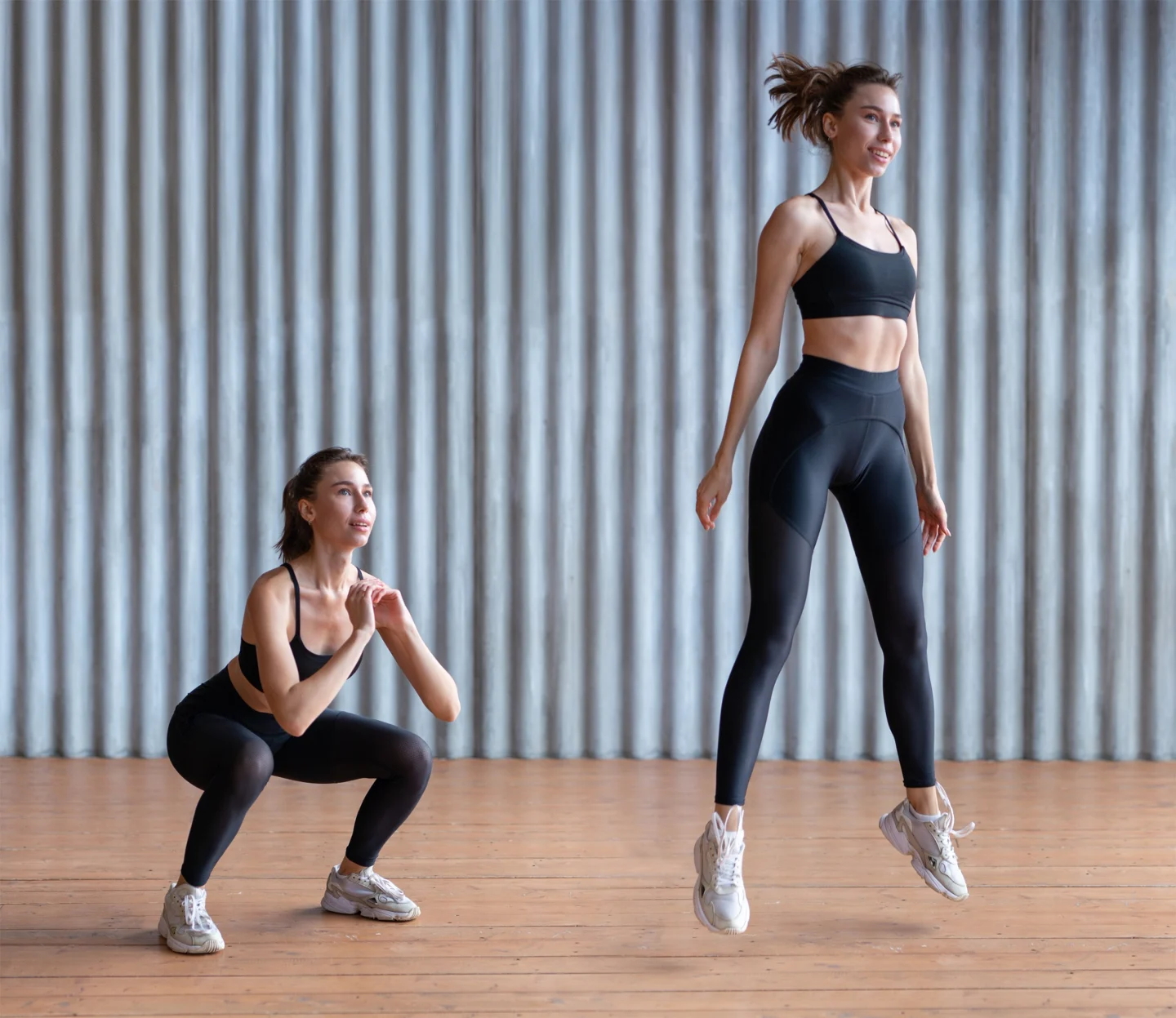
The emphasis then shifts to:
- muscle strength;
- endurance;
- stability;
- functional loading.
Phase 4 – Returning to work or sport
The final phase should reflect what you need in real life. For one patient, this means standing for long periods. For another, it means heavy lifting, climbing stairs, running or sport-specific movements. Rehabilitation is truly successful when the function that matters to you returns.
Rehabilitation after an injury
An injury usually requires more than waiting for the pain to subside. During rehabilitation, we consider:
- what has been injured or overloaded;
- which movements are currently possible;
- how much load the tissue can tolerate;
- what you ultimately need to be able to do again;
- and how we can increase loading safely.
Too little loading can delay recovery. Too much can trigger symptoms again. The key is therefore to increase loading gradually and purposefully.
Shoulder rehabilitation
The shoulder relies heavily on good coordination between the joint, muscles and nervous system. Shoulder rehabilitation may focus on:
- range of motion;
- rotator cuff strength;
- shoulder blade control;
- loading above shoulder height;
- lifting and carrying;
- sport- or work-specific movements.
For example, the approach to a frozen shoulder differs from rehabilitation after shoulder surgery or a sport-related tendon problem. Rehabilitation is therefore always developed individually.
Knee rehabilitation
For knee symptoms, we look beyond the knee itself. Strength and control in the hip, thigh, calf and trunk may also be relevant to function. Depending on your situation, we may work on:
- knee bending and straightening;
- quadriceps strength;
- hamstring strength;
- balance;
- control when climbing stairs;
- squats and lunges;
- walking and running;
- jumping and landing;
- sport-specific loading.
When returning to sport, “no more pain” is not always enough. The knee must also be able to withstand the demands of your sport again.
Hip and ankle rehabilitation
After symptoms or surgery involving the hip, ankle or foot, movement patterns can change. Some patients compensate without realising it. Where necessary, we therefore work on:
- mobility;
- muscle strength;
- balance;
- walking pattern;
- capacity to tolerate activity;
- and functional movements.
The aim is not just to strengthen the affected area, but to restore an efficient overall movement pattern.
Rehabilitation for persistent symptoms
When symptoms have persisted for a long time, the body may become less able to tolerate physical demands. People often avoid activities because they fear pain or a setback. This is understandable, but prolonged avoidance can actually lead to:
- less strength;
- reduced fitness;
- greater uncertainty;
- lower physical capacity.
For persistent symptoms, we therefore often build up carefully but consistently. The aim is not to avoid every kind of pain during movement completely. It is to learn which loads are safe and how to increase your physical capacity again.
Hands-on treatment during rehabilitation
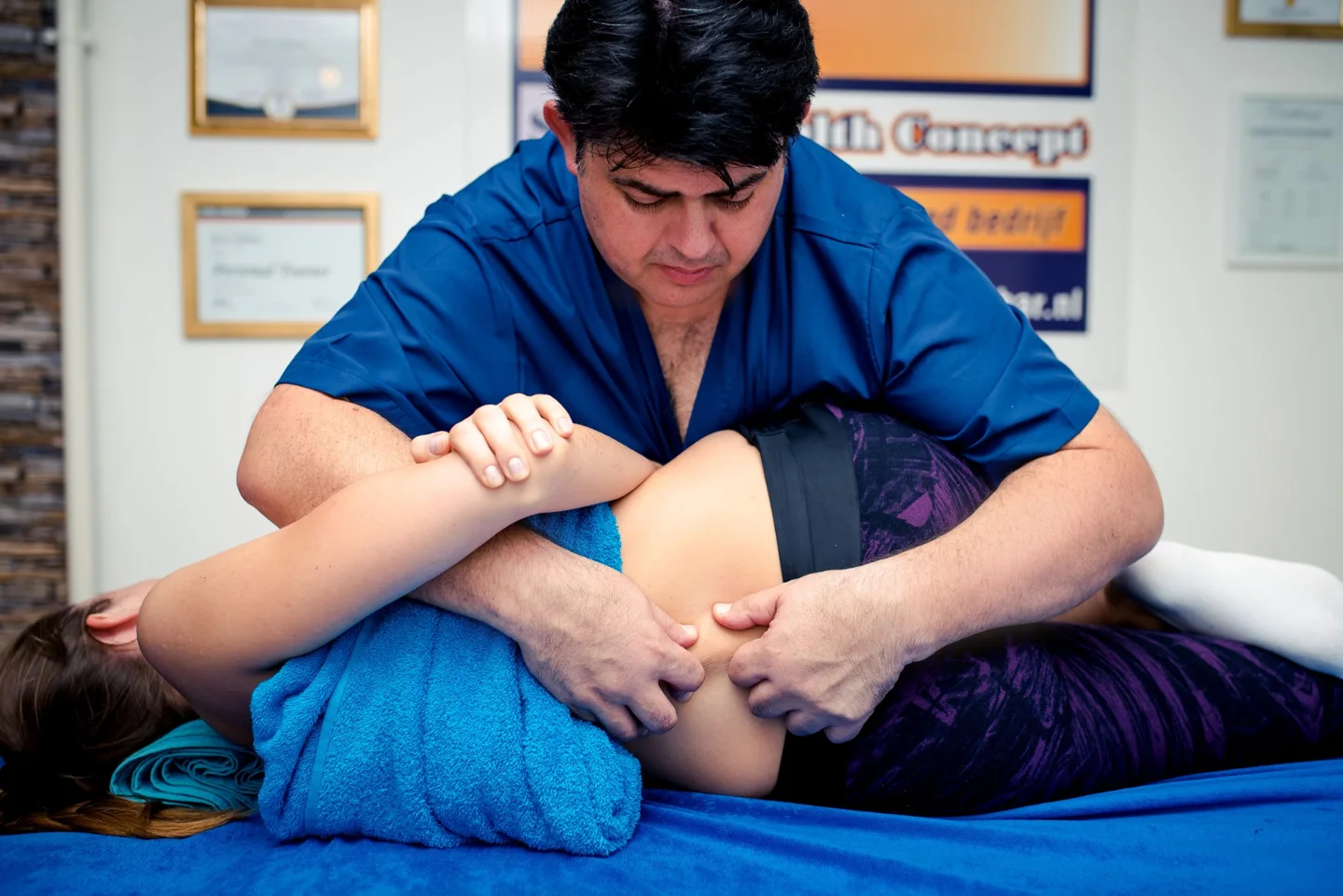
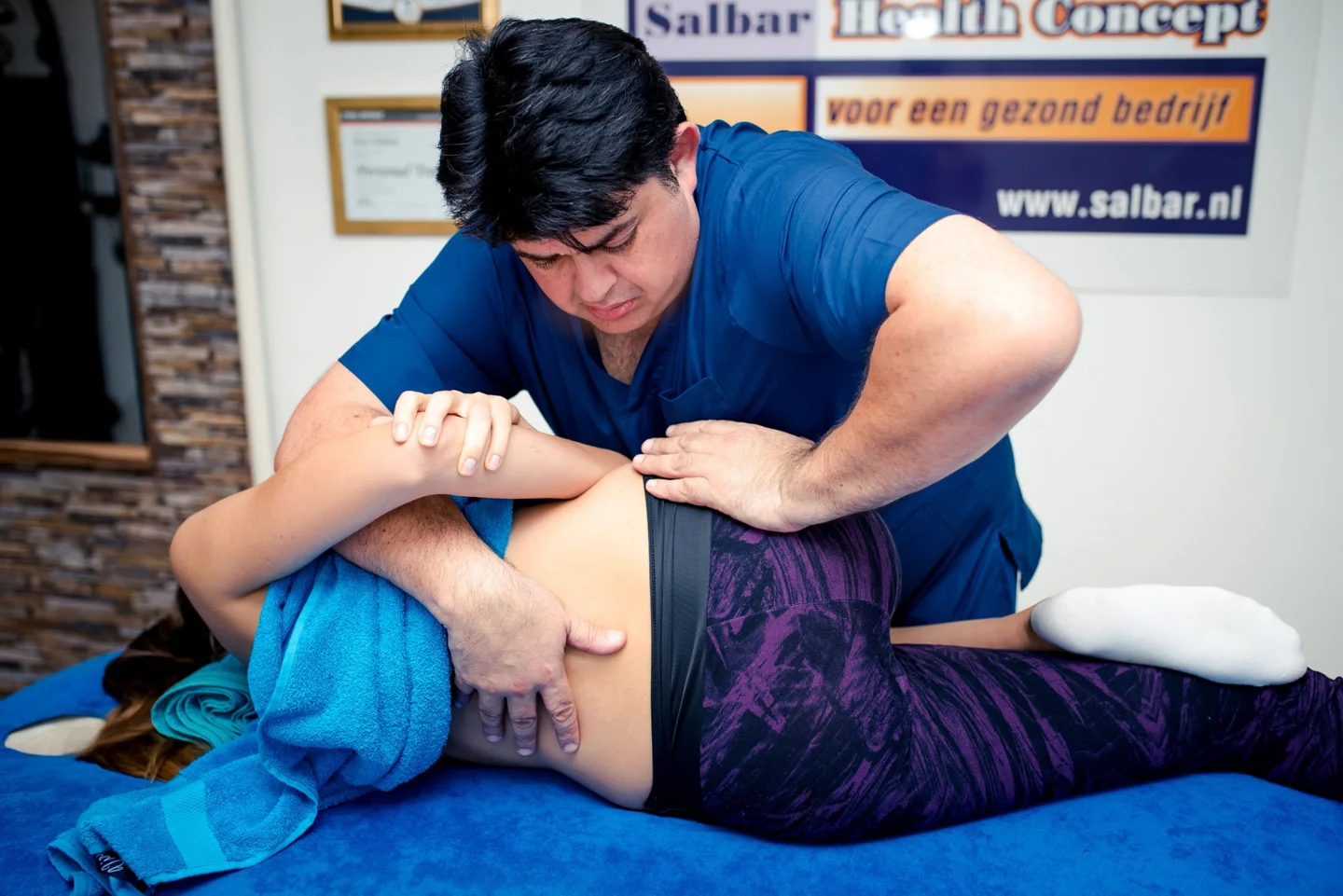
Active exercise therapy forms the basis of many rehabilitation programmes. However, this does not mean that hands-on treatment is never useful. For some patients, additional treatment may help to:
- temporarily reduce pain;
- make movement easier;
- influence muscle tension;
- or make an exercise easier to perform.
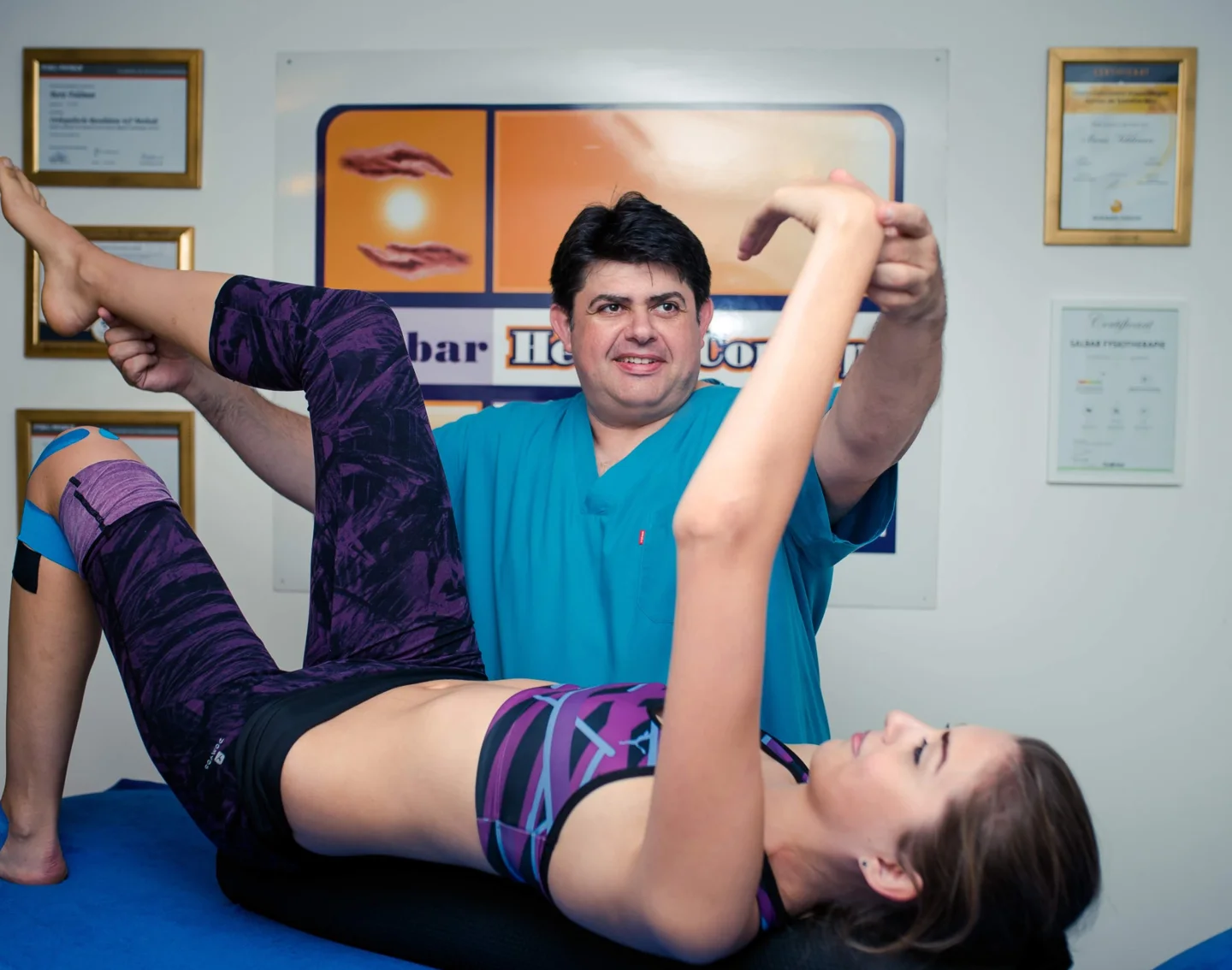
Depending on the situation, I may use:
- mobilisations;
- Mulligan techniques;
- IASTM;
- soft tissue techniques;
- taping;
- neurodynamic techniques;
- or other additional interventions.
These techniques are not an end in themselves. They are only used when they contribute to the wider rehabilitation plan.
No “putting structures back into place”
Within physiotherapy, symptoms are sometimes explained as though the pelvis, a vertebra, a shoulder blade or another body part is literally “out of alignment” and needs repeated correction. This is usually an oversimplified view of the body. Pain and movement problems are influenced by much more than anatomical position alone. During rehabilitation, I therefore look at:
- movement;
- capacity to tolerate activity;
- strength;
- coordination;
- symptoms;
- recovery-related behaviour;
- and function.
Treatment should improve function, rather than create dependence on continuous corrections.
Modern training area
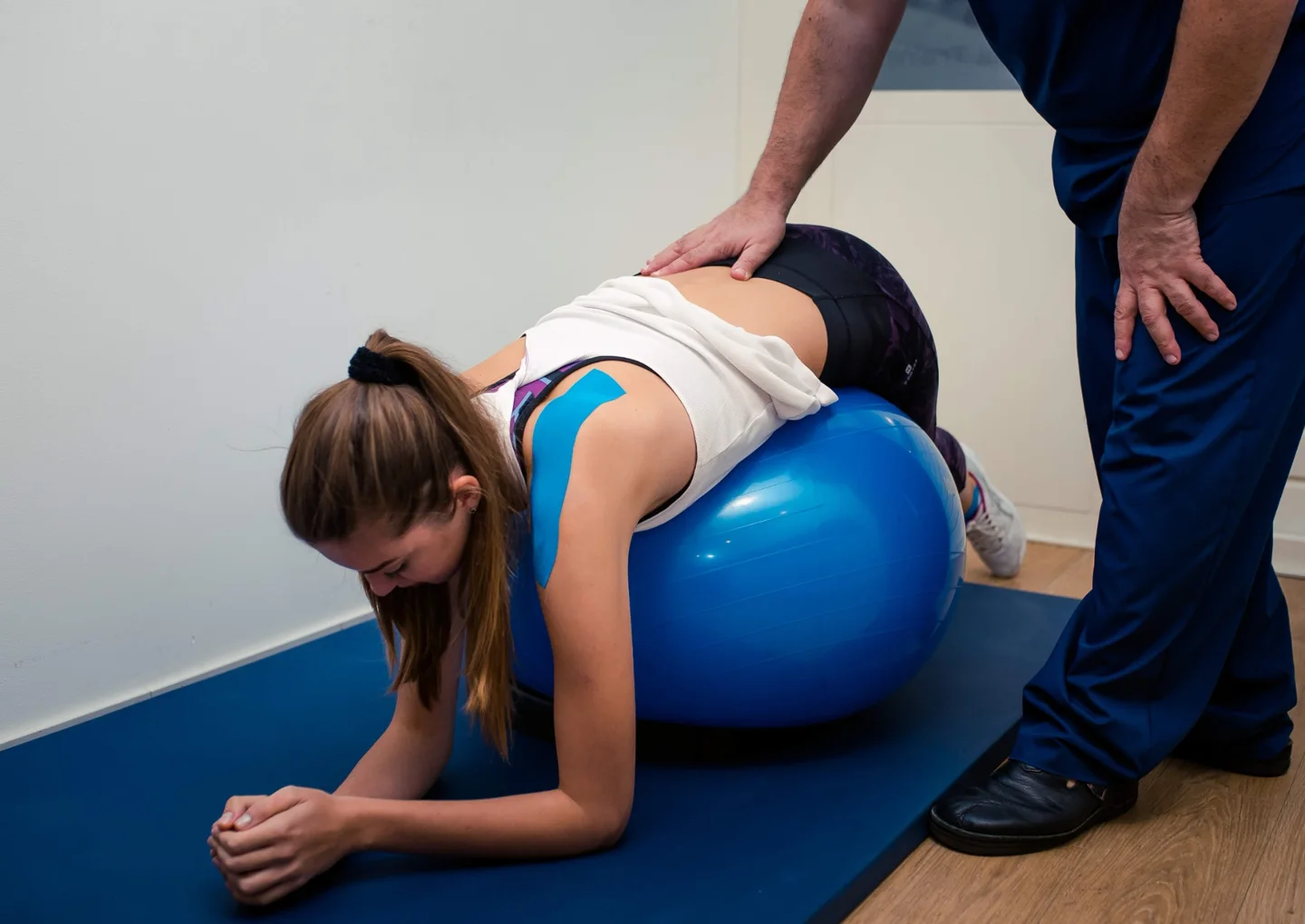
At Salbar Fysiotherapie, rehabilitation can take place in our own training area. This allows me to combine treatment and training directly. We can work specifically on:
- strength;
- mobility;
- endurance;
- stability;
- functional movement;
- and sport-specific loading.
Training is adapted to your level. You do not need to be “fit enough” before you can start. Rehabilitation begins at the level that is safe and achievable at that time.
Additional treatment techniques
When there is a clear indication, I can use additional treatment modalities. Examples include:
Shockwave
For certain tendon-related conditions, shockwave may form part of treatment. Shockwave does not replace exercise therapy, but can be used as an addition for selected symptoms.
Neuromuscular electrical stimulation
NMES can help with muscle activation in certain situations, for example when a muscle is difficult to contract actively after surgery or immobilisation.
Tecar
Tecar can be used as an additional treatment modality when relevant to the treatment plan.
Taping
Taping can provide temporary support or sensory feedback during movement.
Measuring whether rehabilitation is working
Rehabilitation should be measurable. We therefore regularly assess changes in, for example:
- pain;
- range of motion;
- strength;
- functional tests;
- walking distance;
- work demands;
- training level;
- or activities that you consider important.
Where relevant, I use clinical measurement tools and functional tests. However, the central question remains: can you demonstrably do more than you could a few weeks ago?
No automatic series of treatments
More treatments are not automatically better. I want to see progress during the programme. If treatment does not produce sufficient results, we need to consider why. Perhaps the training load needs adjusting. Perhaps a different treatment strategy is needed. Or further medical examination may be appropriate. A rehabilitation programme must adapt to your recovery, not the other way round.
Returning to work
Work often places very specific demands on the body. These may include prolonged sitting, but also:
- lifting;
- carrying;
- bending;
- working overhead;
- extensive walking;
- repetitive movements.
When returning to work is the goal, we aim to tailor the later stages of rehabilitation as closely as possible to those specific demands. This builds not only general strength, but prepares you for what you actually need to do again.
Returning to sport
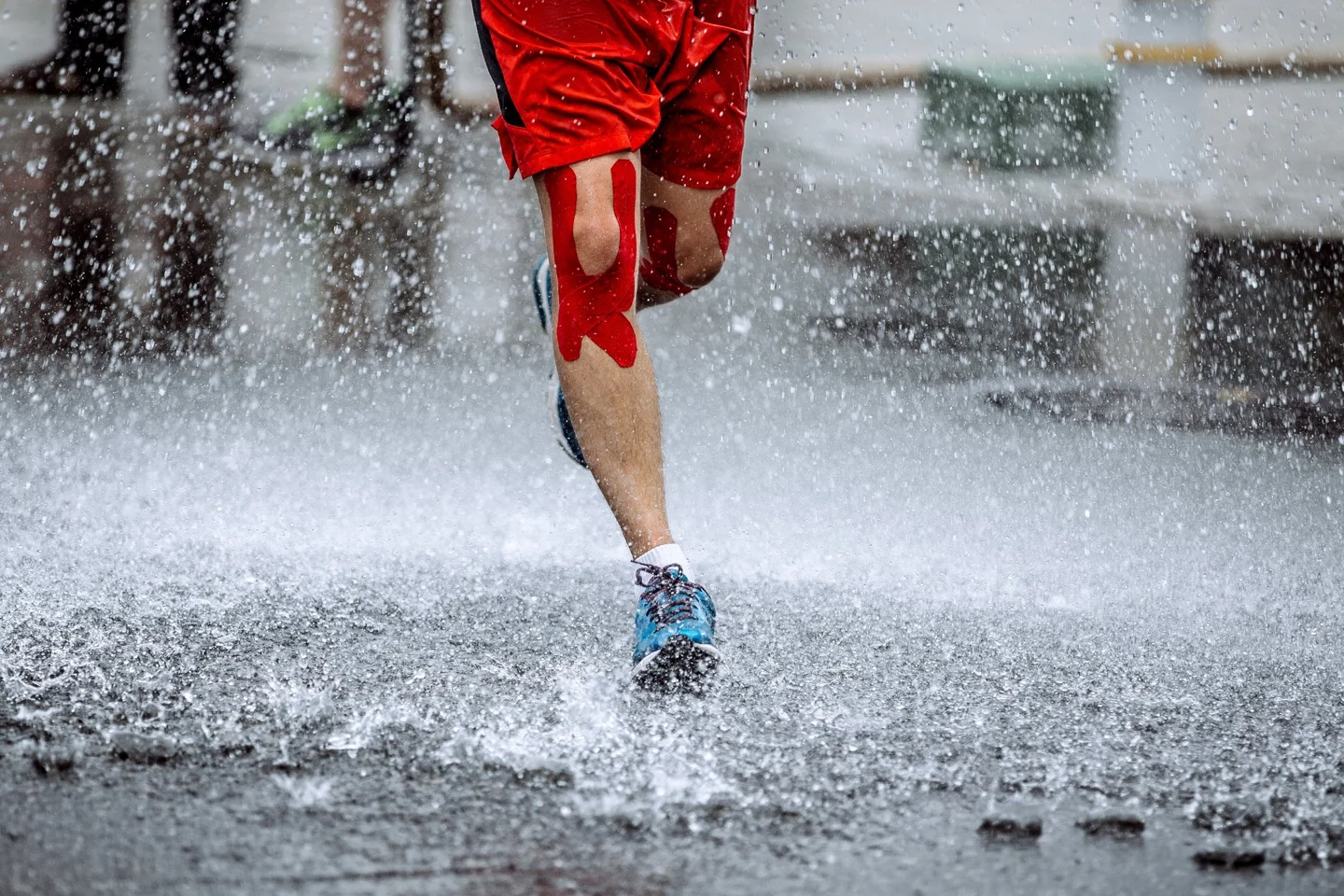
The same principle applies to athletes. A runner faces different demands from a tennis player, footballer or strength athlete. The final phase of rehabilitation therefore becomes increasingly specific. We may work on:
- acceleration;
- deceleration;
- changes of direction;
- jumping;
- landing;
- strength;
- explosive power;
- and sport-specific movements.
The calendar alone does not determine when you are ready to return to sport. Wherever possible, we assess your actual function and physical capacity.
My approach to rehabilitation
For me, effective rehabilitation has three components: understanding what is happening, choosing the right load, and increasing that load step by step. Treatment techniques can help. Equipment can help. Ultimately, however, your own body must be able to do the work again. My role therefore changes during a successful rehabilitation programme. At first, you may need more guidance. Later, you take on increasingly more yourself. That is exactly the aim.
Personal guidance from Boris Feldman
At Salbar Fysiotherapie, years of clinical experience are complemented by ongoing professional development. Boris Feldman has practised as a physiotherapist since 1996. Assessment, treatment and evaluation are tailored to your capacity, recovery and the activities that matter to you.
Rehabilitation in Vinkeveen
Salbar Fysiotherapie is based in Vinkeveen and is easily accessible for patients from, among other places: Vinkeveen · Mijdrecht · Wilnis · De Ronde Venen and the surrounding area. Would you like to recover after an injury or operation, or do you find that persistent symptoms are preventing you from returning to your previous level? You can book an appointment for an assessment and a personal rehabilitation plan.
Salbar Fysiotherapie, Boris Feldman – physiotherapist, Scholeksterlaan 2, 3645 KC Vinkeveen